
| Application times (◆ optimal, ◇ optional): | Direction for use: |
| ◇/◆ Autumn: 3–6 leaves unfolded The application time should be considered as optimal in case of low sulphur content in the soil. |
 Foliar treatments: 5 L/ha Combined use with UAN: Foliar treatments: 5 L/ha Combined use with UAN:2–4 L/100 litres of UAN |
| ◇/◆ Spring: tillering The application time should be considered as optimal in case of high nitrogen fertilization, especially with liquid fertilizers (UAN), as well as in case of low soil sulphur content in soil. |
Foliar treatments: 5 L/ha Combined use with UAN: 2–4 L/100 litres of UAN |
| ◇/◆ stem elongation The application time should be considered as optimal in case of high nitrogen fertilization, especially with liquid fertilizers (UAN), as well as in case of low soil sulphur content in soil. |
Foliar treatments: 5 L/ha Combined use with UAN: 2–4 L/100 litres of UAN |
| ◇ flag leaf stage / beginning of heading | Foliar treatments: 5 L/ha Combined use with UAN: 2–4 L/100 litres of UAN |
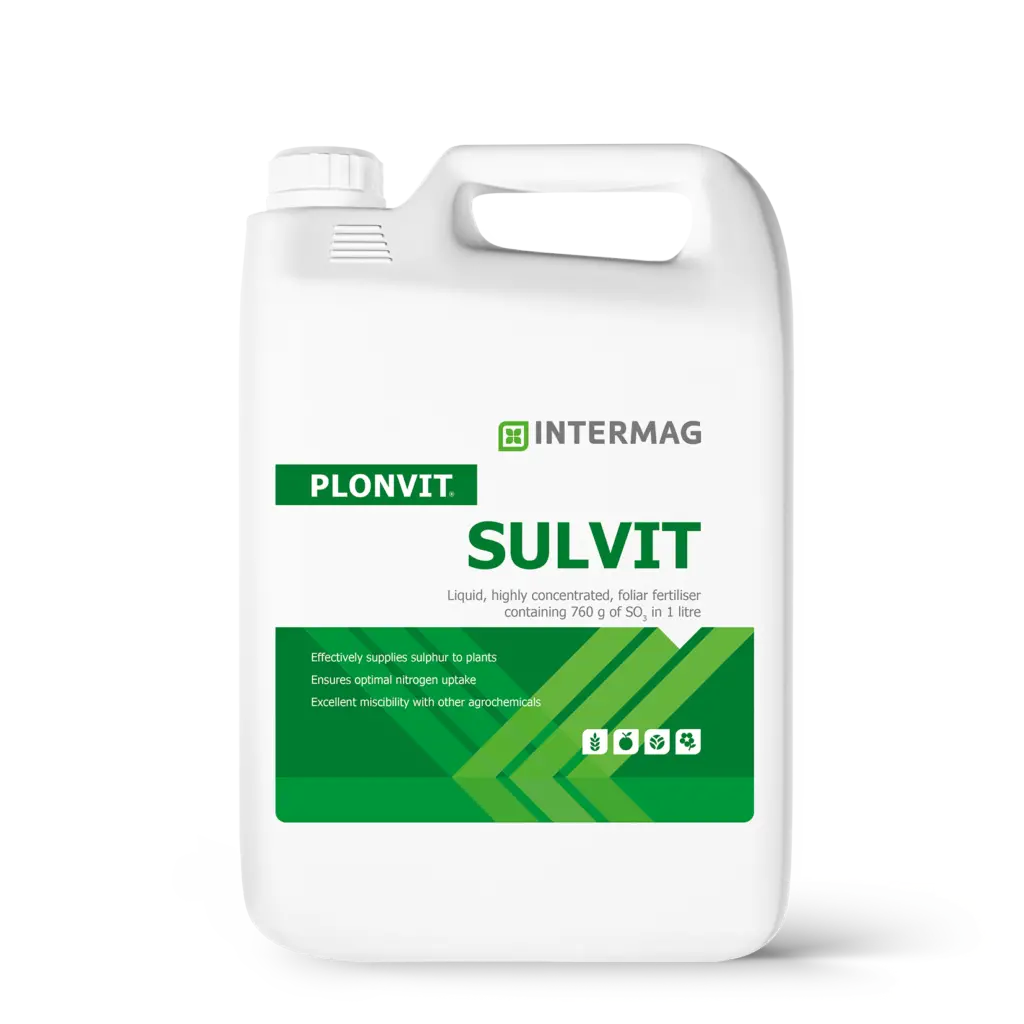
PLONVIT SULVIT
Liquid, highly concentrated, foliar fertilizer reach in sulphur in form easily available by plants
DESCRIPTION
PLONVIT® SULVIT is a liquid, highly concentrated sulfur fertilizer (760 g SO3 in 1 liter) intended for foliar feeding of plants or for use in soil together with liquid nitrogen fertilizers (e.g. UAN). It is particularly recommended for crops with high sulfur requirements, as well as during periods of increased plant demand for nitrogen.
PLONVIT® SULVIT applied topically as an additive to liquid nitrogen fertilizers (e.g. UAN), prevents nitrogen loss (inhibitor of nitrogen metabolism).
| Nutrients | g/L | % (m/m) |
| Total nitrogen (N) | 200 | 15.0 |
| Nitrogen (N) ammonium (NH4) | 140 | 10.5 |
| Nitrogen (N) urea (NH2) | 60 | 4.5 |
| Sulfur trioxide (SO3) | 760 | 57.5 |
| Sulphur (S) soluble in water | 304 | 23.0 |
PLONVIT® SULVIT used prophylactically is an effective source of sulfur during periods of increased plant demand for nitrogen (sulfur is necessary for plants to utilize nitrogen from soil and fertilizers) and in crops with high requirements for sulfur (e.g., rapeseed, cabbage, cauliflower, mustard, radish, onion, garlic, legumes), as well as in crops with high requirements for nitrogen (e.g., cereals). The fertilizer is recommended when there are soil conditions that limit the availability of sulfur for plants (low soil temperature and moisture, light soils, high calcium content in the soil). PLONVIT® SULVIT applied at the times and doses recommended in the fertilization programs for individual species, effectively supplements and/or corrects soil fertilization and provides sulfur easily absorbed by plants at the stages when they show the greatest need for this element.
Intervention feeding is advisable when there are visual symptoms of sulfur deficiency on plants or when the results of analysis of plant material indicate that the sulfur content is too low (latent deficiency).
Sulfur (S) provided in PLONVIT® SULVIT fertilizer has a beneficial effect on yield size and quality by:
- increasing the efficiency of nitrogen fertilization, better uptake of nitrogen from the soil
- enhancing the energy of free nitrogen fixation by soil bacteria (e.g. Rhizobium, Azotobacter, Azospirillum)
- intensification of the process of photosynthesis – increases the biomass of plants
- proper course of protein and fat synthesis
- increase the content of protein – essential amino acids in the crop (e.g., improving the baking value of flour)
- improving the setting of grains and seeds
- increasing plant resistance to diseases and pests
- increased resistance to drought stress
- increased frost resistance.
Directions for Use
- FOLIAR SPRAYS
PLONVIT® SULVIT is intended for foliar application in the form of an aqueous solution. PLONVIT® SULVIT can be used together with other agrochemicals after conducting a miscibility test. Detailed recommendations for foliar application are presented in the table below.
- USE IN COMBINATION with UAN SOLUTION (or other liquid nitrogen fertilizers)
PLONVIT® SULVIT may be used in combination with urea-ammonium nitrate solution to increase the effectiveness of nitrogen utilisation (sulphur present in PLONVIT® SULVIT is an urease and nitrogenase inhibitor).Dosage: 2–4 L of PLONVIT® SULVIT in 100 L of UAN.
Ad. 1. Recommendations for foliar application for selected crops.
The recommendations may be modified taking into account the plants’ requirements and growing conditions.
Additional Information
| Application times (◆ optimal, ◇ optional): | Direction for use: |
| ◇/◆ leaf development – tillering The application time should be considered as optimal in case of high nitrogen fertilization, especially with liquid fertilizers (UAN), as well as in case of low soil sulphur content in soil. |
Foliar treatments: 5 L/ha Combined use with UAN: 2–4 L/100 litres of UAN |
| ◇/◆ stem elongation The application time should be considered as optimal in case of high nitrogen fertilization, especially with liquid fertilizers (UAN), as well as in case of low soil sulphur content in soil. |
Foliar treatments: 5 L/ha Combined use with UAN: 2–4 L/100 litres of UAN |
| ◇ flag leaf stage / beginning of heading | Foliar treatments: 5 L/ha Combined use with UAN: 2–4 L/100 litres of UAN |
| Application times (◆ optimal, ◇ optional): | Direction for use: |
| ◇ Autumn: 3–6 leaves unfolded | Foliar treatments: 5 L/ha Combined use with UAN: 2–4 L/100 litres of UAN |
| ◇/◆ Spring: continuation of tillering The application time should be considered as optimal in case of high nitrogen fertilization, especially with liquid fertilizers (UAN), as well as in case of low soil sulphur content in soil. |
Foliar treatments: 5 L/ha Combined use with UAN: 2–4 L/100 litres of UAN |
| ◇/◆ stem elongation The application time should be considered as optimal in case of high nitrogen fertilization, especially with liquid fertilizers (UAN), as well as in case of low soil sulphur content in soil. |
Foliar treatments: 5 L/ha Combined use with UAN: 2–4 L/100 litres of UAN |
| ◇ flag leaf stage / beginning of heading | Foliar treatments: 5 L/ha Combined use with UAN: 2–4 L/100 litres of UAN |
| Application times (◆ optimal, ◇ optional): | Direction for use: |
| ◇/◆ leaf development – tillering The application time should be considered as optimal in case of high nitrogen fertilization, especially with liquid fertilizers (UAN), as well as in case of low soil sulphur content in soil. |
Foliar treatments: 5 L/ha Combined use with UAN: 2–4 L/100 litres of UAN |
| ◇/◆ stem elongation The application time should be considered as optimal in case of high nitrogen fertilization, especially with liquid fertilizers (UAN), as well as in case of low soil sulphur content in soil. |
Foliar treatments: 5 L/ha Combined use with UAN: 2–4 L/100 litres of UAN |
| ◇ flag leaf stage / beginning of heading | Foliar treatments: 5 L/ha Combined use with UAN: 2–4 L/100 litres of UAN |
| Application times (◆ optimal, ◇ optional): | Direction for use: |
| ◇ Autumn: leaf development – until beginning of tillering | Foliar treatments: 5 L/ha Combined use with UAN: 2–4 L/100 litres of UAN |
| ◇/◆ Spring: beginning of stem elongation The treatment should be considered as optimal in case of low sulphur content in the soil and in case of use od UAN. |
Foliar treatments: 5 L/ha Combined use with UAN: 2–4 L/100 litres of UAN |
| ◇/◆ flag leaf stage – until first awns visible The treatment should be considered as optimal in the case of low sulphur content in the soil. |
Foliar treatments: 5 L/ha Combined use with UAN: 2–4 L/100 litres of UAN |
| Application times (◆ optimal, ◇ optional): | Direction for use: |
| ◇/◆ leaf development – until beginning of stem elongation The treatment should be considered as optimal in case of low sulphur content in the soil and in the case of use UAN. |
Foliar treatments: 5 L/ha Combined use with UAN: 2–4 L/100 litres of UAN |
| ◇/◆ flag leaf stage – until first awns visible The treatment should be considered as optimal in case of low sulphur content in the soil. |
Foliar treatments: 5 L/ha Combined use with UAN: 2–4 L/100 litres of UAN |
| Application times (◆ optimal, ◇ optional): | Direction for use: |
| Autumn: ◇ leaf development – until beginning of tillering (BBCH 13–22) |
5 L/ha |
| Spring: ◆ beginning of steam elongation (BBCH 30–32) |
5 L/ha |
| ◇/◆ flag leaf stage – until first awns visible (BBCH 39–49) Treatment is considered optimal for crops in soils with low content of mineral nitrogen. |
5 L/ha |
| Application times (◆ optimal, ◇ optional): | Direction for use: |
| ◇/◆ leaf development – until beginning of stem elongation The treatment should be considered as optimal in case of low sulphur content in the soil and in the case of use UAN. |
5 L/ha |
| ◇/◆ flag leaf stage – until first awns visible The treatment should be considered as optimal in case of low sulphur content in the soil. |
5 L/ha |
| Application times (◆ optimal, ◇ optional): | Direction for use: |
| ◇ Autumn: leaf development – until beginning of tillering | 5 L/ha |
| ◇ Spring: beginning of steam elongation | 5 L/ha |
| ◇ flag leaf stage – until beginning of heading | 5 L/ha |
| Application times (◆ optimal, ◇ optional): | Direction for use: |
| ◇ leaf development – until beginning of steam elongation | 5 L/ha |
| ◇ flag leaf stage – until beginning of heading | 5 L/ha |
| Application times (◆ optimal, ◇ optional): | Direction for use: |
| ◇ leaf development – tillering | 5 L/ha |
| ◇ stem elongation – until flag leaf stage | 5 L/ha |
| ◇ end of flowering – until early milk | 5 L/ha |
| Application times (◆ optimal, ◇ optional): | Direction for use: |
| ◇/◆ Late summer: before sowing – to the 4th leaf stage of growth The treatment should be considered as optimal in case of using UAN. |
Combined use with UAN: 2–4 L/100 litres of UAN |
| ◇/◆ Autumn: 4–8 leaves unfolded The treatment should be considered as optimal in case of low sulphur content in the soil. |
Foliar treatment: 5 L/ha |
| ◇/◆ Spring: beginning of main stem elongation The treatment should be considered as optimal in case of high nitrogen fertilization, especially with liquid fertilizers (UAN), as well as in case of low soil sulphur content in soil. |
Combined use with UAN: 2–4 L/100 litres of UAN or Foliar treatment: 5 L/ha |
| ◇/◆ bud formation – until beginning of flowering The treatment should be considered as optimal in case of plantations, where abundant nitrogen fertilization has been applied. |
Foliar treatment: 5 L/ha |
| ◇/◆ from the beginning of petal fall – until the beginning of pods development The treatment should be considered as optimal in case of plantations, where abundant nitrogen fertilization has been applied. |
Foliar treatment: 5 L/ha |
| Application times (◆ optimal, ◇ optional): | Direction for use: |
| ◇/◆ before sowing – to the 4th leaf stage of growth. The treatment should be considered as optimal in case of using UAN. |
Combined use with UAN: 2–4 L/100 litres of UAN |
| ◇/◆ leaf development – until beginning of main stem elongation The treatment should be considered as optimal in case of high nitrogen fertilization, especially with liquid fertilizers (UAN), as well as in case of low soil sulphur content in soil. |
Combined use with UAN: 2–4 L/100 litres of UAN or Foliar treatment: 5 L/ha |
| ◇/◆ bud formation – until beginning of flowering The treatment should be considered as optimal in case of plantations, where abundant nitrogen fertilization has been applied. |
Foliar treatment: 5 L/ha |
| ◇/◆ from the beginning of petal fall – until the beginning of pods development The treatment should be considered as optimal in case of plantations, where abundant nitrogen fertilization has been applied. |
Foliar treatment: 5 L/ha |
| Application times (◆ optimal, ◇ optional): | Direction for use: |
| ◆ 2–3 pairs of leaves (BBCH 14–16) | 4–6 L/ha |
| ◆ stem elongation (BBCH 30–35) | 4–6 L/ha |
| ◇ inflorescence development (BBCH 51–55) | 4–6 L/ha |
| Application times (◆ optimal, ◇ optional): | Direction for use: |
| ◆ leaf development on the main stem (BBCH 12–19) | 4–6 L/ha |
| ◆ stem growth (BBCH 30–39) | 4–6 L/ha |
| ◇ inflorescence development (BBCH 51–55) | 4–6 L/ha |
| Application times (◆ optimal, ◇ optional): | Direction for use: |
| ◇ before sowing (soil spraying) | Combined use with UAN: 2–4 L/100 litres of UAN |
| ◆ 2–6 leaves unfolded (4 leaves is the optimum stage for treatment) | Foliar treatment: 5 L/ha |
| ◆ 7–8 leaves unfolded | Foliar treatment: 5 L/ha |
| Application times (◆ optimal, ◇ optional): | Direction for use: |
| ◆ before sowing –soil application combined with UAN | Combined use with UAN: 2–4 L/100 litres of UAN |
| ◆ beginning of leaf development The treatment should be considered as optimal in the case when SULVIT was not used with soli application of UAN in the before sowing. |
Foliar treatment: 5 L/ha |
| ◆ beginning of crop cover | Combined use with UAN: 2–4 L/100 litres of UAN or Foliar treatment: 5 L/ha |
| ◇ beginning of storage root development | Foliar treatment: 5 L/ha |
| Application times (◆ optimal, ◇ optional): | Direction for use: |
| ◇ before planting (soil spraying) | Combined use with UAN: 2–4 L/100 litres of UAN |
| ◆ beginning of growth of shoots and leaves (plant height about 10 cm) | Combined use with UAN: 2–4 L/100 litres of UAN or Foliar treatment: 5 L/ha |
| ◆ beginning of tuber growth | Foliar treatment: 5 L/ha |
| ◆ tubers reach ca. 50% of the final mass | Foliar treatment: 5 L/ha |
| Application times (◆ optimal, ◇ optional): | Direction for use: |
| ◆ beginning of growth of shoots | 5 L/ha |
| ◆ beginning of flower bud development | 5 L/ha |
| ◇ beginning of pod and seed development | 5 L/ha |
| Application times (◆ optimal, ◇ optional): | Direction for use: |
| ◆ beginning of growth of shoots | 3–5 L/ha |
| ◆ beginning of flower bud development | 3–5 L/ha |
| ◇ beginning of pod and seed development | 3–5 L/ha |
| Application times (◆ optimal, ◇ optional): | Direction for use: |
| ◆ beginning of growth of shoots | 3–5 L/ha |
| ◆ beginning of flower bud development | 3–5 L/ha |
| ◇ beginning of pod and seed development | 3–5 L/ha |
| Application times (◆ optimal, ◇ optional): | Direction for use: |
| ◆ beginning of growth of shoots | 3–5 L/ha |
| ◆ beginning of flower bud development | 3–5 L/ha |
| ◇ beginning of pod and seed development | 3–5 L/ha |
| Application times (◆ optimal, ◇ optional): | Direction for use: |
| ◆ beginning of growth of shoots | 3–5 L/ha |
| ◆ beginning of flower bud development | 3–5 L/ha |
| ◇ beginning of pod and seed development | 3–5 L/ha |
| Application times (◆ optimal, ◇ optional): | Direction for use: |
| ◆ beginning of growth of shoots | 3–5 L/ha |
| ◆ beginning of flower bud development | 3–5 L/ha |
| ◇ beginning of pod and seed development | 3–5 L/ha |
| Application times (◆ optimal, ◇ optional): | Direction for use: |
| ◆ beginning of growth of shoots | 3–5 L/ha |
| ◆ beginning of flower bud development | 3–5 L/ha |
| ◇ beginning of pod and seed development | 3–5 L/ha |
| Application times (◆ optimal, ◇ optional): | Direction for use: |
| ◆ beginning of growth of shoots | 3–5 L/ha |
| ◆ beginning of flower bud development | 3–5 L/ha |
| ◇ beginning of pod and seed development | 3–5 L/ha |
| Application times (◆ optimal, ◇ optional): | Direction for use: |
| ◆ beginning of growth of shoots | 3–5 L/ha |
| ◆ beginning of flower bud development | 3–5 L/ha |
| ◇ beginning of pod and seed development | 3–5 L/ha |
| Application times (◆ optimal, ◇ optional): | Direction for use: |
| ◆ development of leaves and shoots (BBCH 13–29) | 5 L/ha |
| ◆ inflorescence development (BBCH 51–55) | 5 L/ha |
| ◇ first poppy seed pods begin to form (BBCH 71–73) | 5 L/ha |
| Application times (◆ optimal, ◇ optional): | Direction for use: |
| ◆ 2–6 leaves (BBCH 12–16); optimum time for treatment is 4 leaves | 4–6 L/ha |
| ◆ leaf development until beginning of stem elongation (BBCH 17–31) | 4–6 L/ha |
| ◇ stem elongation until beginning of tassel formation (BBCH 33–51) | 4–6 L/ha |
| Application times (◆ optimal, ◇ optional): | Direction for use: |
| ◆ 4–9 leaves (BBCH 14–19) | 4–6 L/ha |
| ◆ beginning of stem elongation (BBCH 31–33) | 4–6 L/ha |
| ◇ stem elongation until beginning of tassel development (BBCH 35–51) | 4–6 L/ha |
| Application times (◆ optimal, ◇ optional): | Direction for use: |
| ◆ leaf development – tillering | 4–6 L/ha |
| ◆ beginning of stem formation | 4–6 L/ha |
| ◇ beginning of panicle emergence | 4–6 L/ha |
| Application times (◆ optimal, ◇ optional): | Direction for use: |
| ◆ beginning of leaf development | 4–6 L/ha |
| ◆ beginning of side shoots formation | 4–6 L/ha |
| ◇ beginning of flower bud development | 4–6 L/ha |
| Application times for foliar treatments (◆ optimal, ◇ optional): | Direction for use: |
| ◇from full flowering to natural fruit drop: 2 treatments every 14–28 days Warning! Fertilizer applied at a dose of 15 l/ha at the beginning of falling of flower petals could result in fruitlet thinning. |
Foliar treatments – single dose 3-5 L/ha |
| Application times for foliar treatments (◆ optimal, ◇ optional): | Direction for use: |
| ◆ Spring: leaf development | Foliar treatments – single dose 3-5 L/ha |
| ◆ Spring/summer: growth of main stem and side shoots | |
| ◇ Late summer: end of elongation growth of the main stem |
| Application times for foliar treatments (◆ optimal, ◇ optional): | Direction for use: |
| ◆ 1st year – summer (about 3–4 weeks after budding): end of shoot and leaf growth | Foliar treatments – single dose 3-5 L/ha |
| ◆ 2nd year – spring/summer: growth of main stem and side shoots | |
| ◇ 2nd year – late summer: end of elongation growth of the main stem |
| Application times for foliar treatments (◆ optimal, ◇ optional): | Direction for use: |
| ◆ 1st year – summer (about 3–4 weeks after budding): end of shoot and leaf growth | Foliar treatments – single dose 3-5 L/ha |
| ◆ 2nd year – spring/summer: growth of main stem and side shoots | |
| ◇ 2nd year – late summer: end of elongation growth of the main stem |
| Application times for foliar treatments (◆ optimal, ◇ optional): | Direction for use: |
| ◇ inflorescence emergence | Foliar treatments – single dose 3–5 L/ha |
| ◆ fruitlet development | |
| ◆ the fruit reaches about half of final size | |
| ◇ after harvest |
| Application times for foliar treatments (◆ optimal, ◇ optional): | Direction for use: |
| ◇ inflorescence emergence | Foliar treatments – single dose 3–5 L/ha |
| ◆ fruitlet development | |
| ◆ the fruit reaches about half of final size | |
| ◇ after harvest |
| Application times for foliar treatments (◆ optimal, ◇ optional): | Direction for use: |
| ◇ inflorescence emergence | Foliar treatments – single dose 3–5 L/ha |
| ◆ fruitlet development | |
| ◆ the fruit reaches about 30% of final size |
| Application times for foliar treatments (◆ optimal, ◇ optional): | Direction for use: |
| ◇ inflorescence emergence | Foliar treatments – single dose 3–5 L/ha |
| ◆ fruitlet development | |
| ◆ the fruit reaches about 30% of final size |
| Application times for foliar treatments (◆ optimal, ◇ optional): | Direction for use: |
| ◇ inflorescence emergence | Foliar treatments – single dose 3–5 L/ha |
| ◆ fruitlet development | |
| ◆ the fruit reaches about 30% of final size |
| Application times for foliar treatments (◆ optimal, ◇ optional): | Direction for use: |
| ◇ inflorescence emergence | Foliar treatments – single dose 3–5 L/ha |
| ◆ fruitlet development | |
| ◆ the fruit reaches about 30% of final size |
| Application times (◆ optimal, ◇ optional): | Direction for use: |
| ◆ new shoot development | 2–3 L/ha |
| ◇ inflorescence emergence | 2–3 L/ha |
| ◆ fruit flesh development (beginning of oil production) | 2–3 L/ha |
| Application times (◆ optimal, ◇ optional): | Direction for use: |
| ◆ leaf and shoot development | 2–3 L/ha |
| ◆ inflorescence development | 2–3 L/ha |
| ◆ intensive growth of fruit | 2–3 L/ha |
| ◇/◆ post-harvest The treatment should be considered as optimal in case of plantations, where abundant nitrogen fertilisation has been applied. |
2–3 L/ha |
| Application times (◆ optimal, ◇ optional): | Direction for use: |
| ◆ leaf and shoot development (BBCH 13–19) | 2–3 L/ha |
| ◆ shoot development (BBCH 31–39) | 2–3 L/ha |
| ◇ beginning of fruit development (BBCH 71–73) | 2–3 L/ha |
| Application times (◆ optimal, ◇ optional): | Direction for use: |
| ◆ leaf and shoot development (BBCH 13–19) | 2–3 L/ha |
| ◆ shoot development (BBCH 31–39) | 2–3 L/ha |
| ◇ fruit development (BBCH 71–75) | 2–3 L/ha |
| Application times (◆ optimal, ◇ optional): | Direction for use: |
| ◆ leaf development (BBCH 14–19) | 2–3 L/ha |
| ◆ beginning of stem growth (BBCH 31–35) | 2–3 L/ha |
| ◇ beginning of fruit development (BBCH 71–73) | 2–3 L/ha |
| Application times for foliar treatments (◆ optimal, ◇ optional): | Direction for use: |
| ◇ after start of growing season – until beginning of fruit development: 1–2 treatments every 7–14 days | Foliar treatments – single dose 2–3 L/ha |
| ◇ immediately after harvest |
Plantations without fertigation
| Application times for foliar treatments (◆ optimal, ◇ optional): | Direction for use: |
| ◇ leaf and shoot growth: 1–2 treatments every 21–28 days | Foliar treatments – single dose 2–3 L/ha |
| ◇ beginning of the first fruit development |
Fertigated plantations
| Application times for foliar treatments (◆ optimal, ◇ optional): | Direction for use: |
| ◇ leaf and shoot growth: 1–2 treatments every 21–28 days | Foliar treatments – single dose 2–3 L/ha. |
Plantations without fertigation
| Application times for foliar treatments (◆ optimal, ◇ optional): | Direction for use: |
| ◇ leaf and shoot growth | Foliar treatments – single dose 2–3 L/ha |
| ◇ beginning of inflorescence emergence | |
| ◇ beginning of fruit development |
Fertigated plantations
| Application times for foliar treatments (◆ optimal, ◇ optional): | Direction for use: |
| ◇ leaf and shoot growth | Foliar treatments – single dose 2–3 L/ha |
| Application times for foliar treatments (◆ optimal, ◇ optional): | Direction for use: |
| ◇ leaf and shoot development | Foliar treatments – single dose 2–3 L/ha |
| ◇ beginning of inflorescence emergence | |
| ◇ beginning of fruit development | |
| ◇ immediately after harvest: 1–2 treatments every 10–21 days, before bud formation for the next growing season |
| Application times for foliar treatments (◆ optimal, ◇ optional): | Direction for use: |
| ◇ leaf and new shoot development | Foliar treatments – single dose 2–3 L/ha |
| Application times (◆ optimal, ◇ optional): | Direction for use: |
| ◇ beginning of leaf and new shoot development | 2–3 L/ha |
| ◇ fruit development – until berries pea-sized | 2–3 L/ha |
| Application times (◆ optimal, ◇ optional): | Direction for use: |
| ◆ leaf development | 2–3 L/ha |
| ◆ beginning of inflorescence emergence | 2–3 L/ha |
| ◇ beginning of flowering | 2–3 L/ha |
| ◇ beginning of fruit development | 2–3 L/ha |
| ◇ post-harvest – when plants are leaving for the next growing season: 1–2 treatments every 10–21 days | 2–3 L/ha |
| Application times for foliar treatments (◆ optimal, ◇ optional): | Direction for use: |
| ◆ leaf development | Foliar treatments – single dose 2–3 L/ha. |
| ◆ beginning of inflorescence emergence | |
| ◇ beginning of flowering | |
| ◇ beginning of fruit development |
| Application times for foliar treatments (◆ optimal, ◇ optional): | Direction for use: |
| ◆ intensive plant growth | Foliar treatments – single dose 2–3 L/ha |
| ◆ beginning of inflorescence emergence | |
| ◇ beginning of flowering | |
| ◇ fruit development |
| Application times for foliar treatments (◆ optimal, ◇ optional): | Direction for use: |
| ◇ intensive plant growth | Foliar treatments – single dose 2–3 L/ha |
| ◇ the inflorescence emergence – beginning of flowering | |
| ◇ fruit development |
| Application times for foliar treatments (◆ optimal, ◇ optional): | Direction for use: |
| ◇ intensive plant growth | Foliar treatments – single dose 2–3 L/ha |
| ◇ the inflorescence emergence – beginning of flowering | |
| ◇ beginning of fruit development |
| Application times for foliar treatments (◆ optimal, ◇ optional): | Direction for use: |
| ◆ intensive plant growth | Foliar treatments – single dose 2–3 L/ha |
| ◇ the first flower bud emergence | |
| ◇ beginning of flowering | |
| ◇ beginning of fruit development |
| Application times for foliar treatments (◆ optimal, ◇ optional): | Direction for use: |
| ◇ intensive plant growth | Foliar treatments – single dose 2–3 L/ha |
| ◇ the first flower bud emergence – beginning of flowering | |
| ◇ beginning of fruit development |
| Application times for foliar treatments (◆ optimal, ◇ optional): | Direction for use: |
| ◆ 3–6 leaves unfolded | Foliar treatments – single dose 2–3 L/ha |
| ◆ intensive plant growth: 1–2 treatments every 7–10 days | |
| ◇ after the first harvest |
| Application times for foliar treatments (◆ optimal, ◇ optional): | Direction for use: |
| ◆ 3–6 leaves unfolded | Foliar treatments – single dose 2–3 L/ha |
| ◆ intensive plant growth: 1–2 treatments every 7–10 days | |
| ◇ after the first harvest |
| Application times for foliar treatments (◆ optimal, ◇ optional): | Direction for use: |
| ◆ 3–6 leaves unfolded | Foliar treatments – single dose 2–3 L/ha |
| ◆ intensive plant growth: 1–2 treatments every 7–10 days | |
| ◇ after the first harvest |
| Application times for foliar treatments (◆ optimal, ◇ optional): | Direction for use: |
| ◆ 3–6 leaves unfolded | Foliar treatments – single dose 2–3 L/ha |
| ◆ intensive plant growth | |
| ◇ beginning of fruit development |
| Application times for foliar treatments (◆ optimal, ◇ optional): | Direction for use: |
| ◆ 3–6 leaves unfolded | Foliar treatments – single dose 2–3 L/ha |
| ◆ intensive plant growth | |
| ◇ beginning of fruit development |
| Application times for foliar treatments (◆ optimal, ◇ optional): | Direction for use: |
| ◆ 3–6 leaves unfolded | Foliar treatments – single dose 2–3 L/ha |
| ◆ intensive plant growth | |
| ◇ beginning of fruit development |
| Application times for foliar treatments (◆ optimal, ◇ optional): | Direction for use: |
| ◆ preparing the soil for sowing | Combined use with UAN: 2–4 L per 100 litres of UAN |
| ◆ growth of leaves | Combined use with UAN: 2–4 L per 100 litres of UAN or 1–2 foliar treatments every 14–21 days – single dose 5 L/ha |
| ◆ beginning of onion bulb formation | Foliar treatment – single dose 5 L/ha |
| Application times for foliar treatments (◆ optimal, ◇ optional): | Direction for use: |
| ◆ preparing the soil for planting of seedling | Combined use with UAN: 2–4 L per 100 litres of UAN |
| ◆ growth of leaves | Combined use with UAN: 2–4 L per 100 litres of UAN or 1–2 foliar treatments every 14–21 days – single dose 5 L/ha |
| ◆ beginning of onion bulb formation | Foliar treatment – single dose 5 L/ha |
| Application times for foliar treatments (◆ optimal, ◇ optional): | Direction for use: |
| ◆ preparing the soil for planting of onion sets | Combined use with UAN: 2–4 L per 100 litres of UAN |
| ◆ growth of leaves | Combined use with UAN: 2–4 L per 100 litres of UAN or 1–2 foliar treatments every 14–21 days – single dose 5 L/ha |
| ◆ beginning of onion bulb formation | Foliar treatment – single dose 5 L/ha |
| Application times for foliar treatments (◆ optimal, ◇ optional): | Direction for use: |
| ◇ preparing the soil for sowing | Combined use with UAN: 2–4 L per 100 litres of UAN |
| ◇ growth of leaves | Foliar treatment – single dose 5 L/ha |
| Application times for foliar treatments (◆ optimal, ◇ optional): | Direction for use: |
| ◇/◆ preparing the soil for planting of garlic cloves The application time should be considered as optimal for garlic planted in spring. |
Combined use with UAN: 2–4 L/100 litres of UAN |
| ◆ growth of leaves | Combined use with UAN: 2–4 L/100 litres of UAN or 2 foliar treatments every 14–21 days – single dose 5 L/ha |
| ◆ beginning of garlic bulb formation | Foliar treatment – single dose 5 L/ha |
| Application times for foliar treatments (◆ optimal, ◇ optional): | Direction for use: |
| ◆ preparing of the soil for planting of seedling | Combined use with UAN: 2–4 L/100 litres of UAN |
| ◆ beginning of growth of plants | Combined use with UAN: 2–4 L/100 litres of UAN or 2–3 foliar treatments every 10–21 days – single dose 5 L/ha |
| Application times for foliar treatments (◆ optimal, ◇ optional): | Direction for use: |
| ◆ after seedling adaptation to field conditions – leaf development | Foliar treatments – single dose 5 L/ha |
| ◆ growth of leaves | |
| ◇ beginning of the flower head development |
| Application times for foliar treatments (◆ optimal, ◇ optional): | Direction for use: |
| ◆ after seedling adaptation to field conditions – leaf development | Foliar treatments – single dose 5 L/ha |
| ◆ growth of leaves | |
| ◇ beginning of the flower head development |
| Application times (◆ optimal, ◇ optional): | Direction for use: |
| ◆ after seedling adaptation to field conditions – leaf development | 5 L/ha |
| ◆ growth of leaves | 5 L/ha |
| ◆ beginning of the head formation | 5 L/ha |
| ◇ head reaches approx. 50% of the typical size | 5 L/ha |
| Application times (◆ optimal, ◇ optional): | Direction for use: |
| ◆ after seedling adaptation to field conditions – leaf development | 5 L/ha |
| ◆ growth of leaves | 5 L/ha |
| ◆ beginning of the head formation | 5 L/ha |
| ◇ head reaches approx. 50% of the typical size | 5 L/ha |
| Application times (◆ optimal, ◇ optional): | Direction for use: |
| ◆ after seedling adaptation to field conditions – leaf development | 5 L/ha |
| ◆ growth of leaves | 5 L/ha |
| ◆ beginning of the head formation | 5 L/ha |
| ◇ head reaches approx. 50% of the typical size | 5 L/ha |
| Application times (◆ optimal, ◇ optional): | Direction for use: |
| ◆ after seedling adaptation to field conditions – leaf development | 5 L/ha |
| ◆ growth of leaves | 5 L/ha |
| ◆ beginning of the head formation | 5 L/ha |
| Application times (◆ optimal, ◇ optional): | Direction for use: |
| ◆ after seedling adaptation to field conditions – leaf development | 5 L/ha |
| ◆ growth of the main stem and leaves | 5 L/ha |
| ◆ beginning of axillary bud (‘sprouts’) formation | 5 L/ha |
| Application times (◆ optimal, ◇ optional): | Direction for use: |
| ◇ growth of leaves | 5 L/ha |
| ◇ beginning of the root thickening formation | 5 L/ha |
| Application times (◆ optimal, ◇ optional): | Direction for use: |
| ◇ growth of leaves | 5 L/ha |
| ◇ beginning of the root thickening formation | 5 L/ha |
| Application times (◆ optimal, ◇ optional): | Direction for use: |
| ◆ after seedling adaptation to field conditions – leaf development | 5 L/ha |
| ◆ growth of the main stem and leaves | 5 L/ha |
| ◇ approx. 50% of the leaf mass formed | 5 L/ha |
| Application times for foliar treatments (◆ optimal, ◇ optional): | Direction for use: |
| ◇ 3rd–5th leaf unfolded | Foliar treatments – single dose 2–3 L/ha. |
| ◇ beginning of storage root formation |
| Application times for foliar treatments (◆ optimal, ◇ optional): | Direction for use: |
| ◇ 3rd–5th leaf unfolded | Foliar treatments – single dose 2–3 L/ha. |
| ◇ beginning of storage root formation |
| Application times for foliar treatments (◆ optimal, ◇ optional): | Direction for use: |
| ◇ 3rd–5th leaf unfolded | Foliar treatments – single dose 2–3 L/ha. |
| ◇ beginning of storage root formation |
| Application times (◆ optimal, ◇ optional): | Direction for use: |
| ◇ 5–6 true leaves (BBCH 15–16), approx.. 7 days after planting seedlings | 3–5 L/ha |
| ◇ root begins to expand (BBCH 41–43) | 3–5 L/ha |
| Application times (◆ optimal, ◇ optional): | Direction for use: |
| ◇ 3–4 true leaves (BBCH 13–14) | 3–5 L/ha |
| ◇ root begins to expand (BBCH 41–43) | 3–5 L/ha |
DISCOVER MORE
VIEW ALL PLANT PRODUCTS →RELATED PRODUCTS
Plant Products
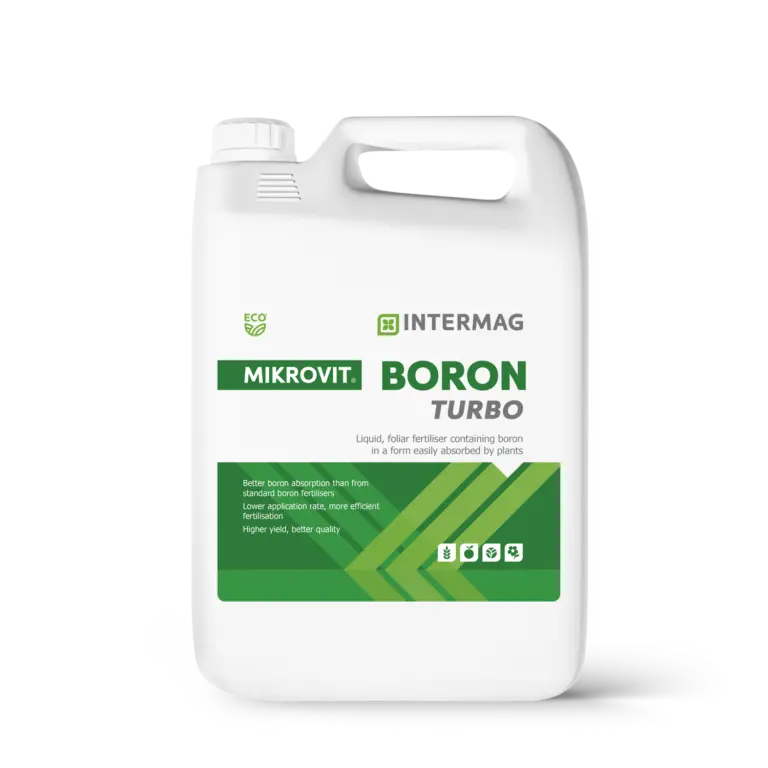
MIKROVIT® BORON TURBO
Liquid, foliar boron fertilizer containing 150 g of Boron in 1L
VIEW DETAILS →
Plant Products
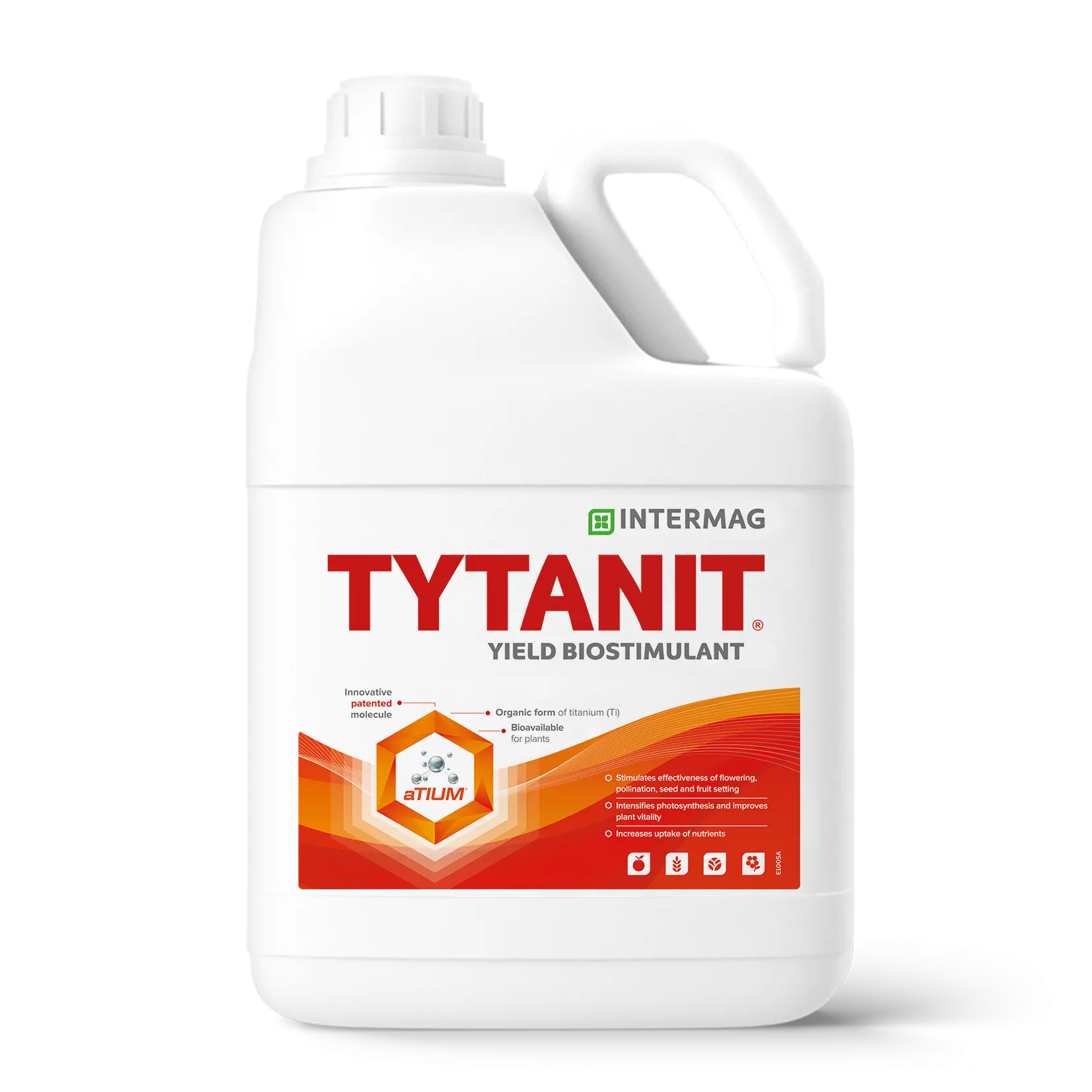
Tytanit
TYTANIT® is a patented growth biostimulant containing TITANIUM (Ti) in a form of unique molecule aTIUM®, what ensures it’s high effectiveness.
VIEW DETAILS →
Plant Products
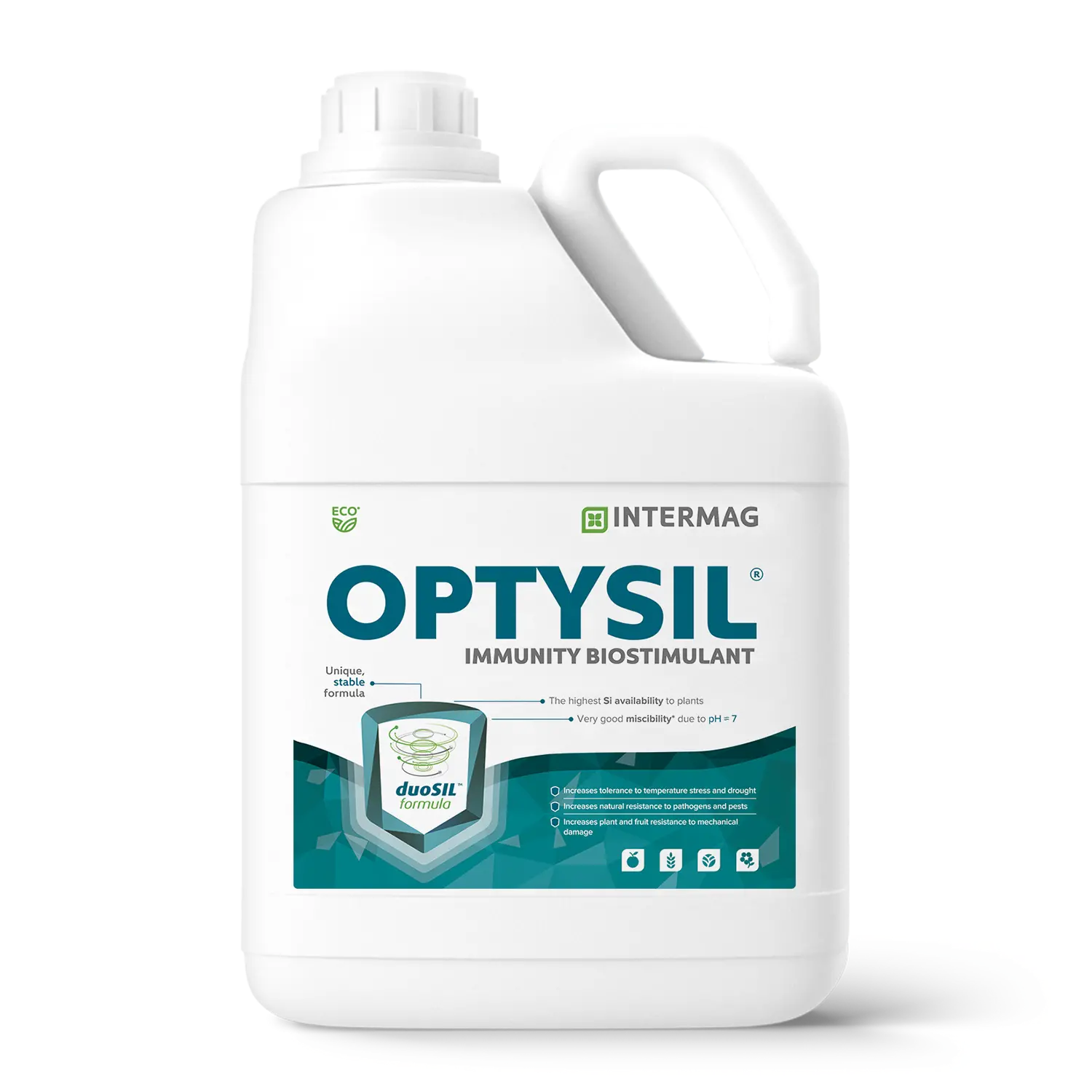
OPTYSIL
OPTYSIL® is an innovative silicon immunity biostimulant, containing active silicon form, which owes its effectiveness to unique formula duoSIL™
VIEW DETAILS →